This article was originally published in The Examiner on June 8, 2017.
By Eleanor Skelton
Staff Writer
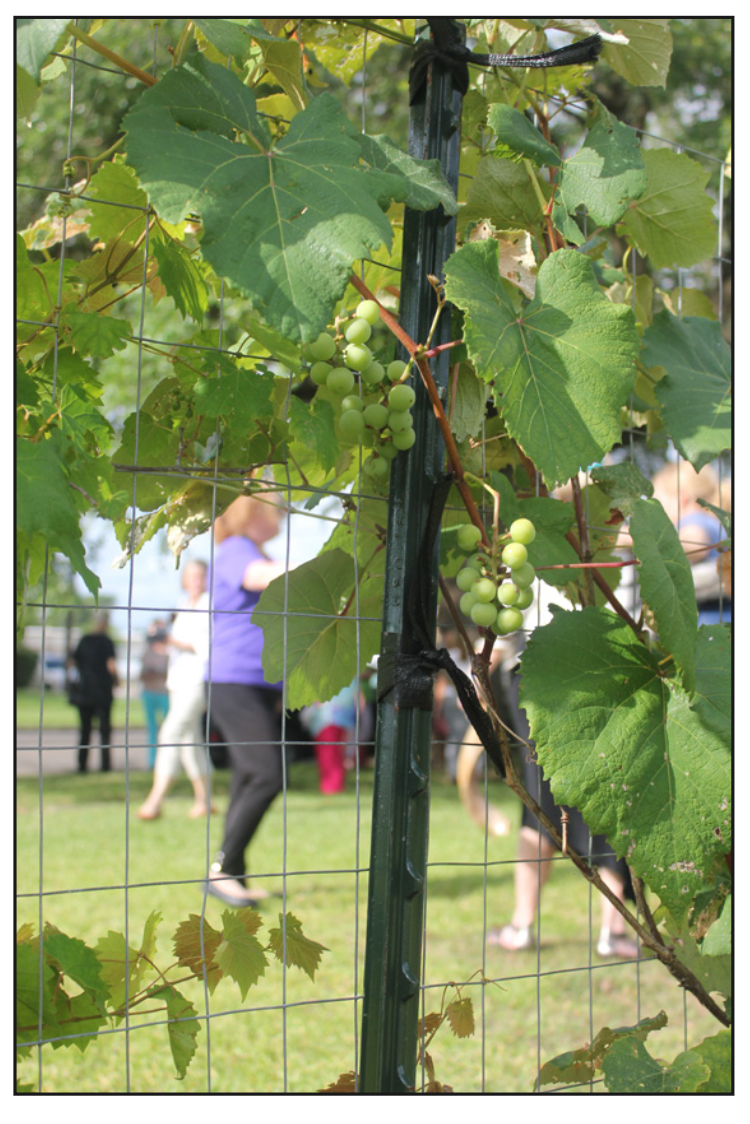
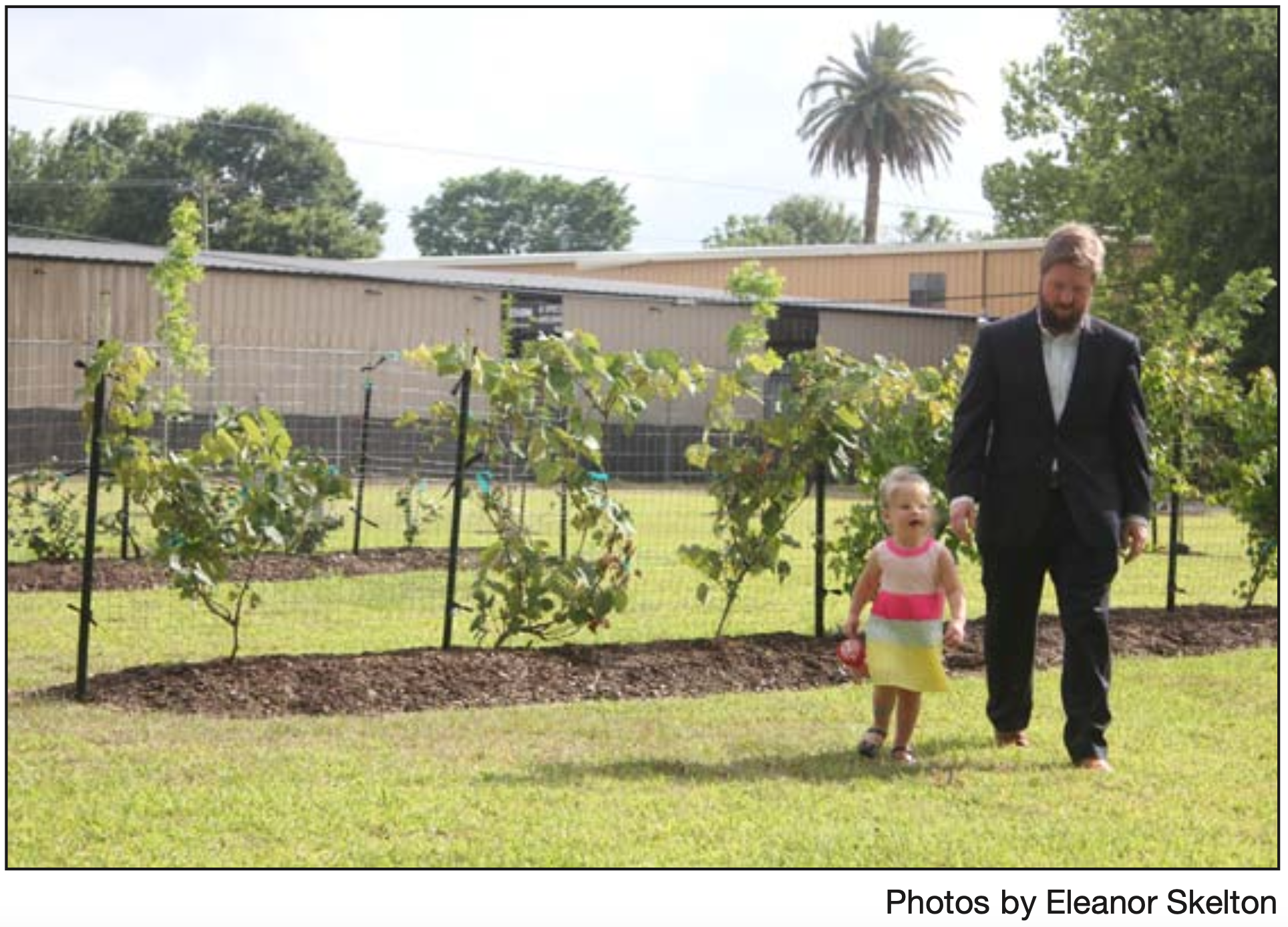
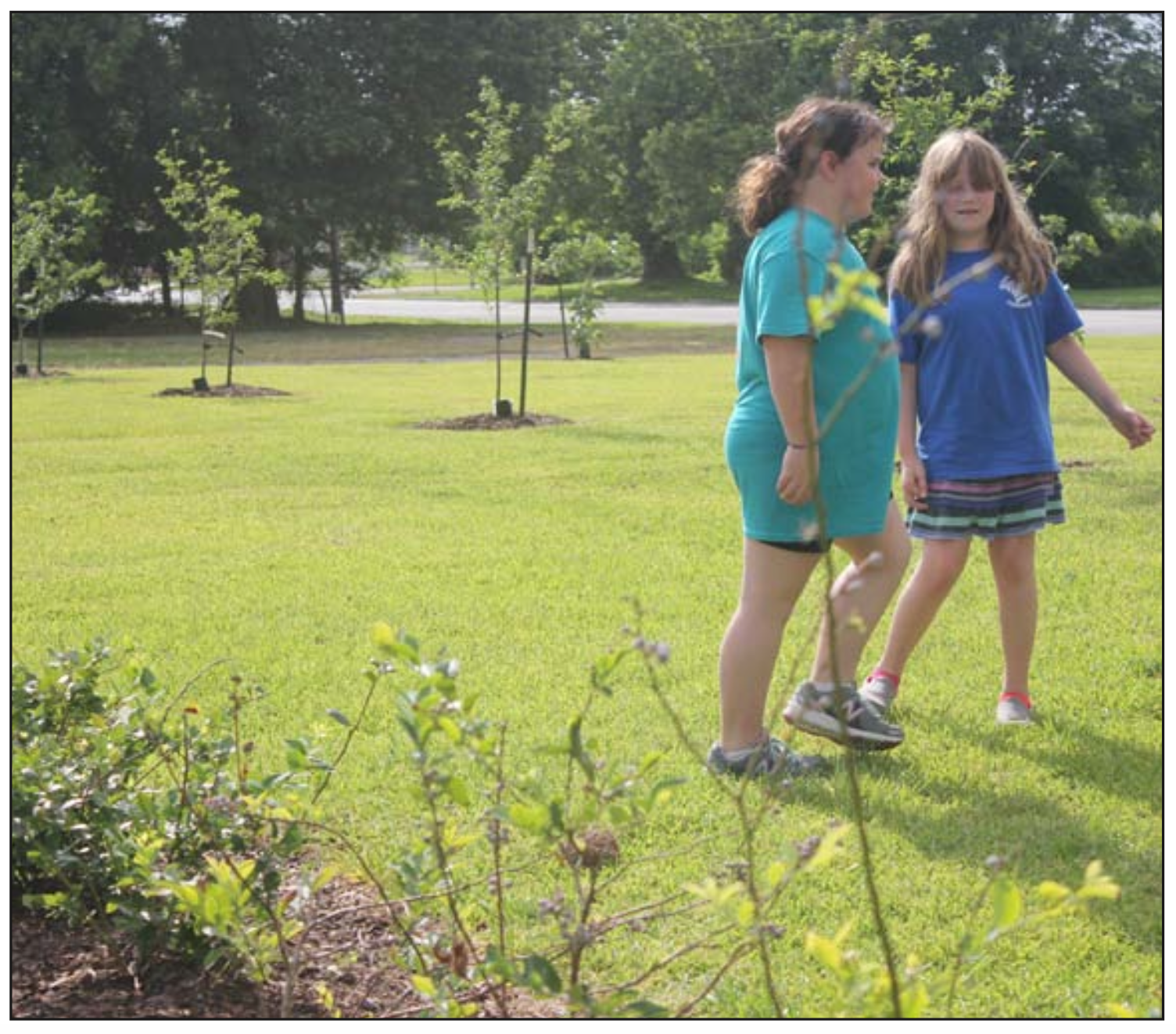
As Temple Emanuel’s new orchard for the homeless opened with a dedication ceremony in May, guests and their children walked through looking at the blueberries, blackberries, grapes, and several citrus and nut trees planted in what used to be a vacant lot across from the Temple.
Temple Emanuel President Allison Nathan Getz recognized the work of the social justice committee members who
she said have “made this happen.”
“Our hope is that those who are hungry can satiate that hunger as they walk by and feel blessed by the Jewish congregation who worship across the street,” she said in a news release.
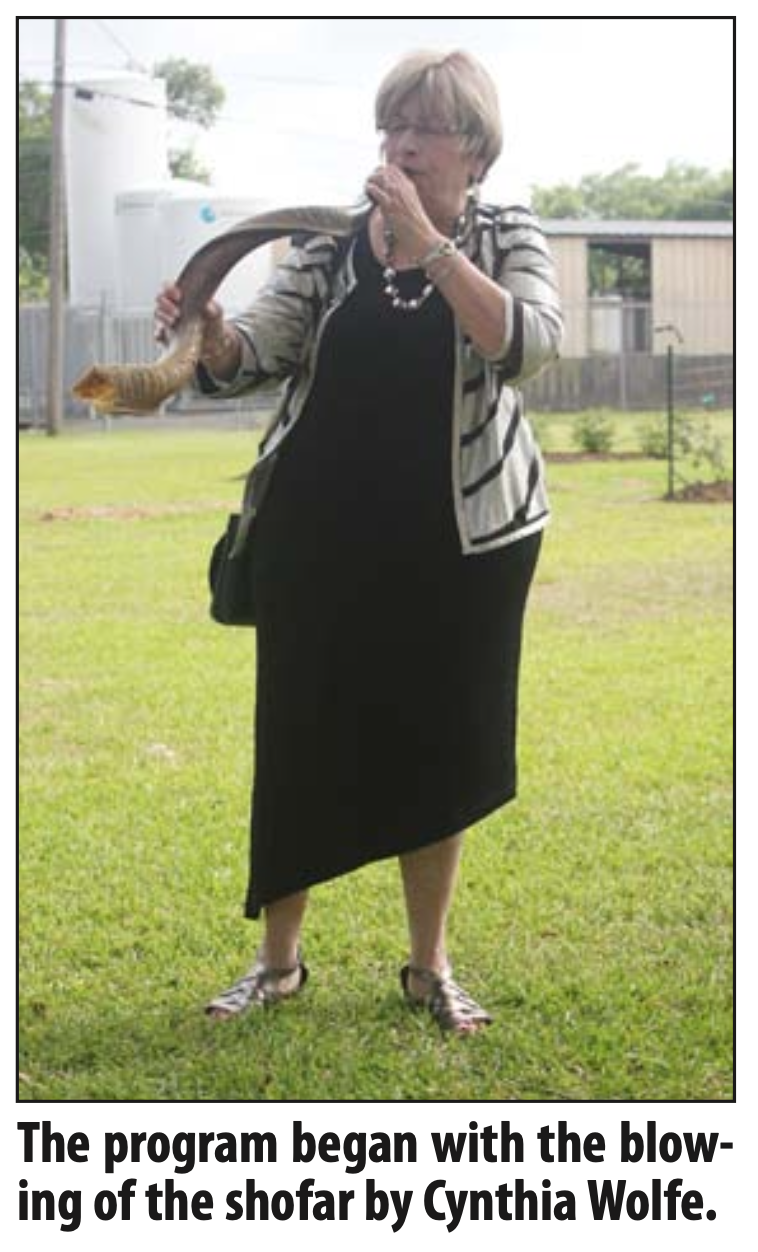
The program began with the blowing of the shofar by Cynthia Wolf.
“This event is a labor of love, and Cynthia’s devotion to this project is unparalleled,” Getz said. “We are all truly thankful for all of her hard work.”
Rabbi Joshua Taub was absent, still battling cancer at M.D. Anderson in Houston, Getz explained, but Stephen Bender, past Temple president, read a short speech from the rabbi referencing Genesis 1:12 about the earth bringing forth seedbearing plants and trees of every kind.
“This orchard, with seed-bearing plants of every kind and trees of every kind bearing fruit with the seed in it, is an act of creation,” Taub wrote. “It is a God-like act of bringing more fresh food into the world.”
“We are commanded to leave the corners of our fields unharvested, likewise to leave behind that which falls from our wagons for the poor, the orphan and the widow, so that they might gather food and sustain themselves when life is at its hardest and most vulnerable,” he said. “This orchard is evidence of our effort to fulfill one of the fundamental values of our ancient tradition.
“Every human being, creatures created in the image of God, has the divine right to food, clothing and shelter.”
The speech concluded with a traditional blessing in Hebrew: “Barukh ata adonai elohenu melekh ha’olam, shehecheyanu, v’kiyimanu, v’higiyanu la’z’man ha’zeh,” which means, “Blessed are You, Lord our God, Ruler of the Universe who has given us life, sustained us, and allowed us to reach this day.”
Mayor Becky Ames also recognized the dedication of the orchard with a proclamation from Beaumont’s city council, read by Councilman Mike Getz, declaring May 19 to be “Temple Emanuel Social Justice Day.”
The proclamation described the history of the Jewish presence in the Golden Triangle for the last 130 years, condensed onto one page.
Getz explained that the orchard is part of the congregation’s Love Thy Neighbor initiative, in addition to their regular volunteer efforts at Some Other Place and the Southeast Texas Food Bank.
It’s part of their philosophy that comes from a rabbinical teaching called “tikkun olam,” which means “repairing the world.”
Bruce Hoffer, a member of the congregation, planted the trees along the front of the property over a decade ago, Getz explained, and then the rest were planted this year.
Students from the Temple’s religious school have regularly planted fruit trees for Tu B’shavat, the Jewish new year of trees.
Hoffer shared a story from the Talmud about planting a carob tree.
“It took 70 years to plant it and they were asked why are you planting it and he said, ‘Well, for the next people,’” Hoffer said, weeping. “And that’s what this is.”
“The orchard is always open,” the Temple said in a news release. “There are no fences, making it easy for those in need to pick with dignity, particularly the homeless who live in the neighborhood.”
The congregation gathered for a reception in the Swerdlow-Roosth Social Hall of Temple Emanuel at 5:30 p.m. and then celebrated with a social justice Shabbat at 6 p.m., followed by O’neg Shabbat, another reception, afterward.
 Eleanor Skelton