
61 youth and child survivors of human trafficking received help through Harvest House in Beaumont last year.
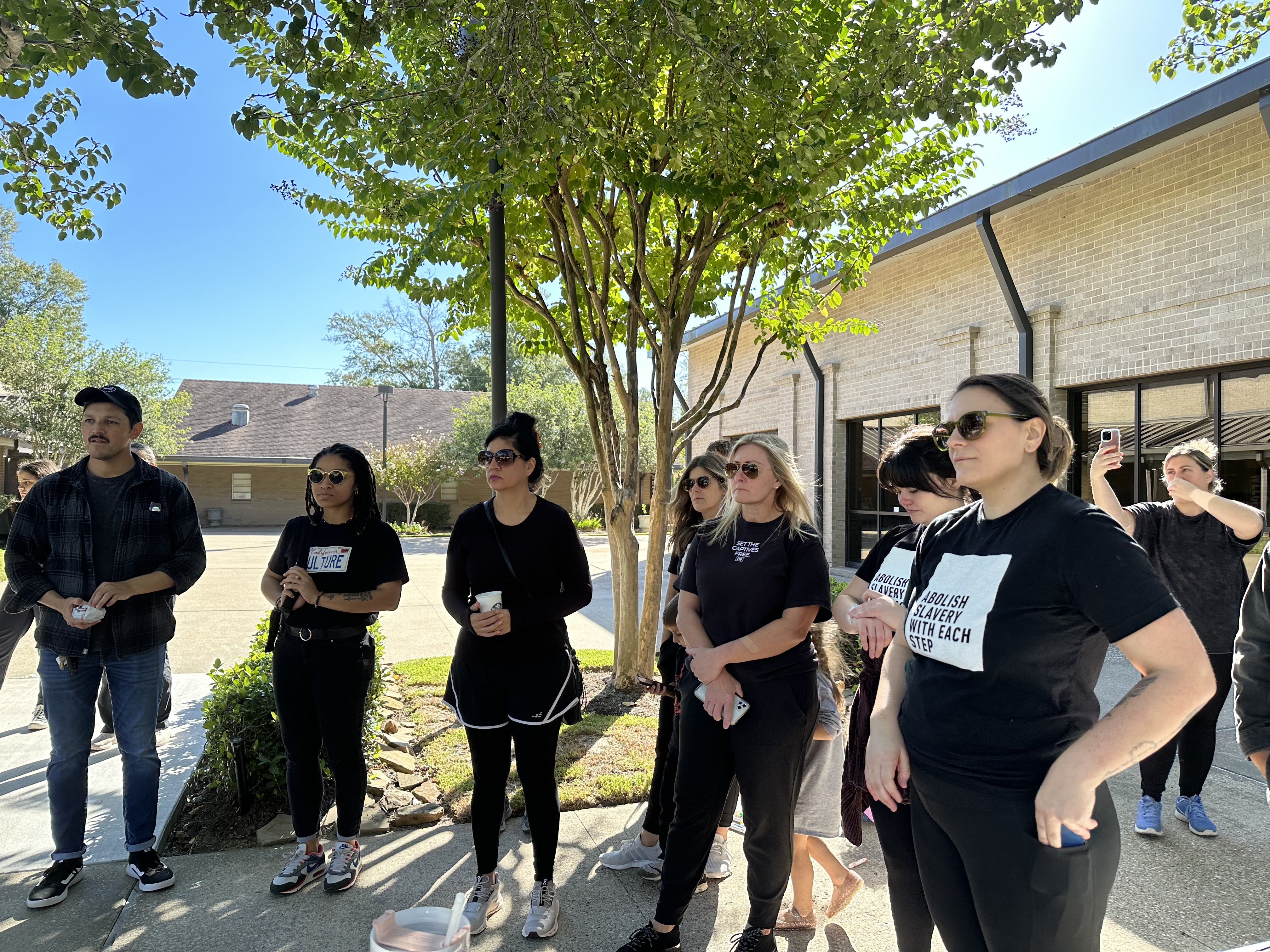
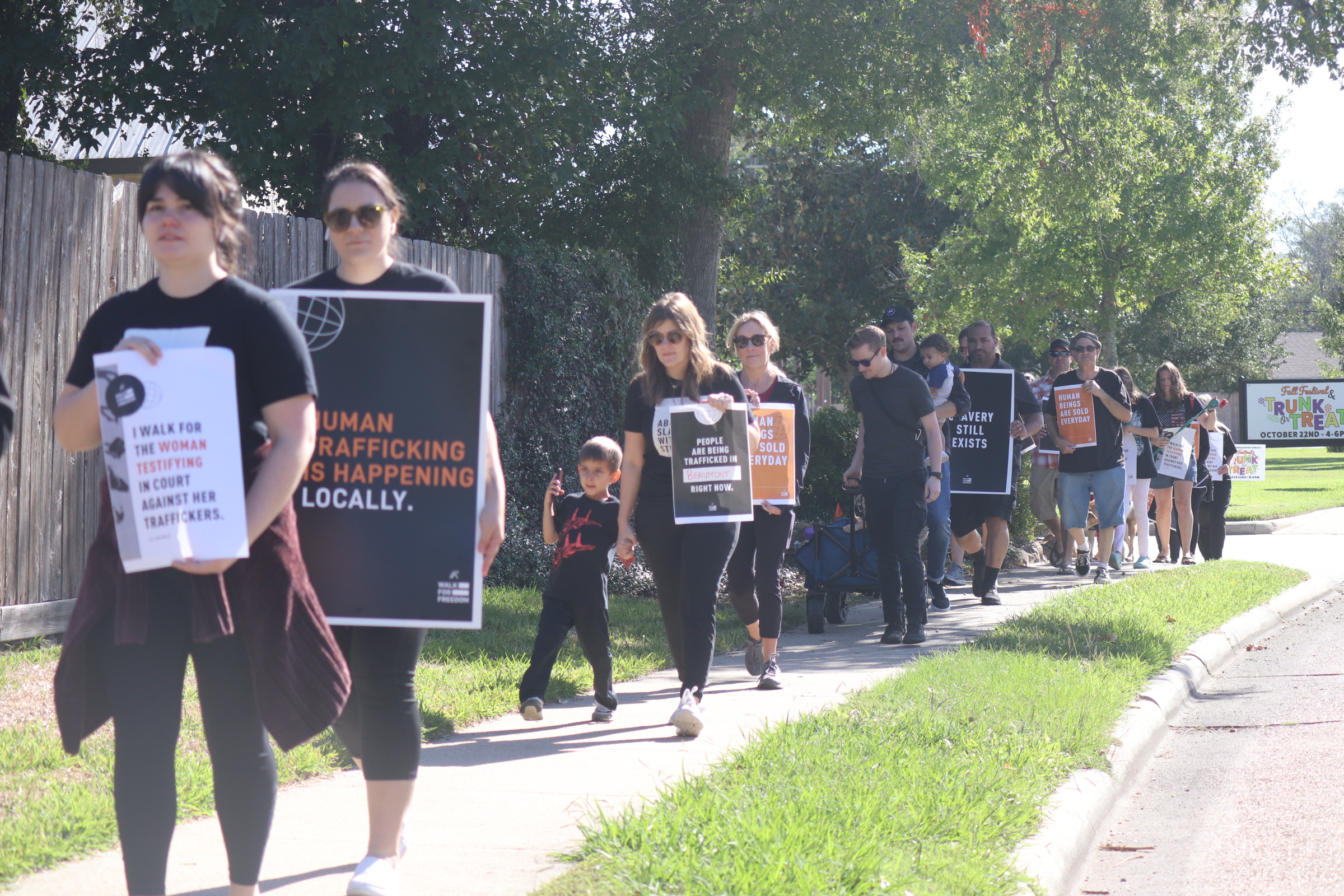
Advocates seeking to raise awareness about the reality of human trafficking in the Golden Triangle gathered at Westgate Memorial Baptist Church Saturday to walk together in a single-file line.
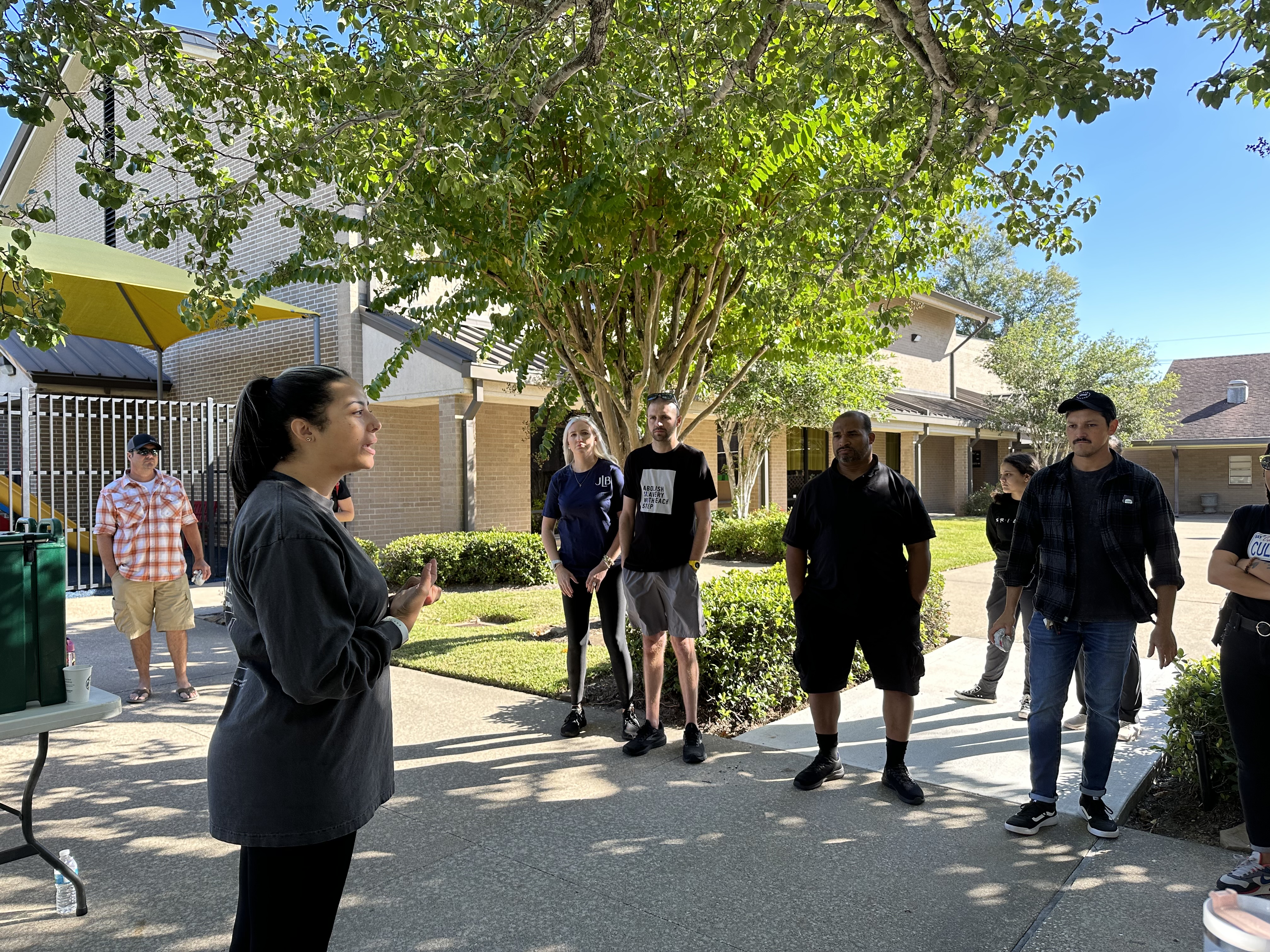
Carrie Pineda has been leading this walk since 2019 along with other members of Trinity Beaumont.
“I think it’s super important for people to know that human trafficking is not a faraway concept, it’s a right here, right now issue,” she said.
313,000 people in Texas are estimated to be victims of human trafficking at any given time, including 79,000 minors and 234,000 who are labor-trafficked, according to 2017 social work researchers at the University of Texas at Austin.
“That’s a big number and it feels faraway,” Pineda said. “When you say that there’s 61 people that are across six counties that are being served actively, that’s different—that puts a different level of heaviness on the subject.”
Pineda said she believes despite technology and information advances, there is still a deficit in understanding the issue of human trafficking. While some human trafficking is like the movie Taken, most trafficking happens in the context of relationships—someone that the victim knows.
Misconceptions and misinformation surround the issue of human trafficking, but Pineda, who also previously worked for Harvest House, said she tries to inform people about what human trafficking actually is.
“It’s on social media, are you teaching your kids about social media?” she said. “And even if you are, they are very, very smart, it could still trick them. It’s so much bigger than we think it is.”
The traffickers could pretend to be teenage boys online and often try to make the victim believe they are choosing this lifestyle, Pineda said.
“The trap becomes, can I get this child to think that we’re in a relationship and it’s a ‘her choice’ thing,” she said. “If she can believe it’s a ‘her choice’ thing, who is going to tell on me?”
When law enforcement conducts a sting operation and find victims under the age of 18 being human trafficked, Pineda said, they may be convinced by their trafficker to lie and say they are adults.
“That’s what trafficking is,” she said. “It’s way more disheartening when you hear that because then you have the realization [that] there’s victims that don’t want to be helped because they think that they’re fine. They don’t know that they have complex trauma. They don’t know that they’ve been tricked.
Pineda said she tries to inform people around her one conversation at a time, using statistics and first-hand accounts from nonprofit organizations like Exodus Road, Harvest House and A21.
“We probably know more people than we think who have had a run-in with trafficking,” she said. “Because of where we are as a society, we probably know somebody who has been impacted negatively by trafficking.”
Pineda asked the volunteers joining them on the walk to think about the 61 children that Harvest House served in Jefferson County last year.
“Those are the people that you’re walking for,” she said. “And there’s others who are still being victimized, who have not come into being a survivor yet. It’s men, women, and children.”
During the walk, several participants listened to a podcast from A21 with headphones while they held signs with statistics about trafficking.
Caitlyn Wilson, co-lead pastor at Trinity Beaumont, has helped lead the Walk for Freedom with Pineda each fall for the last four years.
“Your kid could live in your own home and be trafficked, and I think that’s what’s so concerning to me,” she said. “It’s going to take education, and that’s why I think it’s so important that places like Harvest House exist because they can actually advocate for victims and show love and empathy and give them education about the situation and just work with them and walk through the journey with them.”
Courtney Sanders said she first heard about A21 when she was living in Austin 12 years ago.
“I’ve gotten to meet a survivor, and my heart just breaks for anyone trafficked ,but especially children who should be innocent and should have a childhood,” she said. “Not enough people know that this happens in Beaumont. Not enough people know that I-10 is a very busy corridor for trafficking, so it’s important to me, to not only educate my own kids but to educate others on it as well.”
David Granger said he participated in the walk to make a difference.
“I want people to be aware that it does exist,” he said. “We need to be praying for people in this situation and doing whatever we can to help.”
Over the last four years that Pineda has been leading the Walk for Freedom in Beaumont, she said turned her work in advocacy into a lifestyle and changed her parenting.
“We talk about body parts, and we call them the appropriate parts so that my kids are very well versed in their physical anatomy and what’s their space and what’s not anyone else’s space,” she said. “Those who have been trafficked normally are sexually taken advantage of at a very early age and because no one has taught them no, people do not belong in your personal body space, they end up believing that what’s happened to them is their fault somehow because they were overly sexual when in reality, that’s ludicrous because they’re children.”
Pineda said that she tries to teach her children their value at a young age and the importance of open communication.
“So I’ve expressed to them, I’m always going to believe you if you tell me something happened,” she said. “Telling them to use honest words. It’s a small scale right now, but I’m building on those things.”
Pineda said that she tries to help educate others whenever she can, and she is more aware of her surroundings and keeps the National Center for Missing & Exploited Children hotline number in her phone contacts.


 Eleanor Skelton